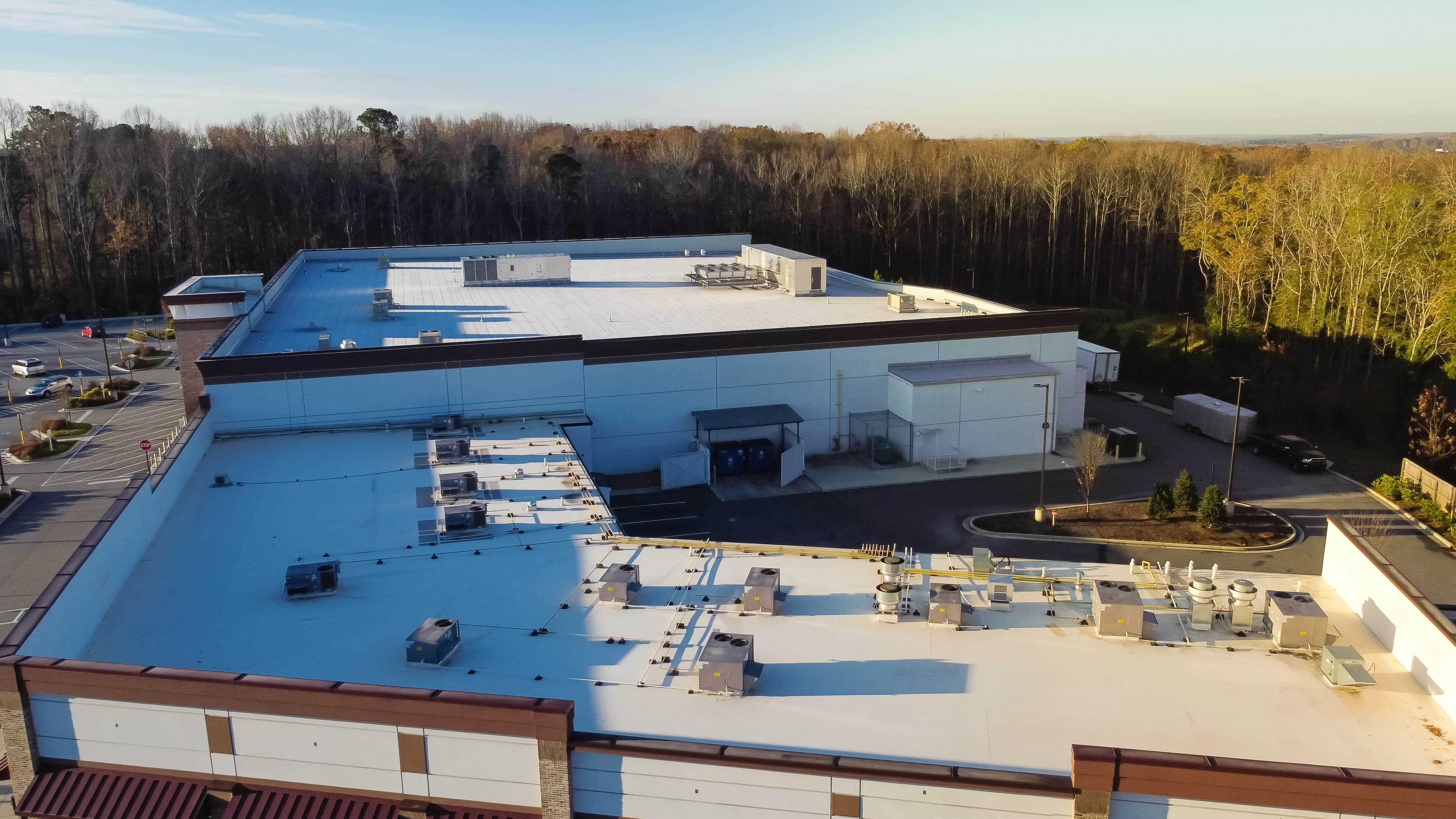
Fitness Center & Gym Roofing
Commercial Property Roofing for Fort Worth buildings: fitness center & gym roofing is reviewed through roof condition, drainage, flashing, access, warranty status, and budget timing.
A Gym Roof Has to Span Wide and Carry a Lot of Air
Walk into almost any fitness floor and look up: the deck overhead is one big uninterrupted span with no columns in the way of the training space. That open span is the first thing that sets gym roofing apart, and it shapes how the roof has to be built. Fort Worth has gained fitness square footage in every direction over the past decade — the Clearfork and Waterside developments along the Trinity on the southwest side, the rooftop-heavy retail boxes lining Hulen Street and the I-20 corridor, the conversions of older retail along Camp Bowie, and the AllianceTexas-area centers up north. Some are tenant build-outs inside existing big-box shells; others are ground-up. All of them put an unusual amount of mechanical equipment on the roof.
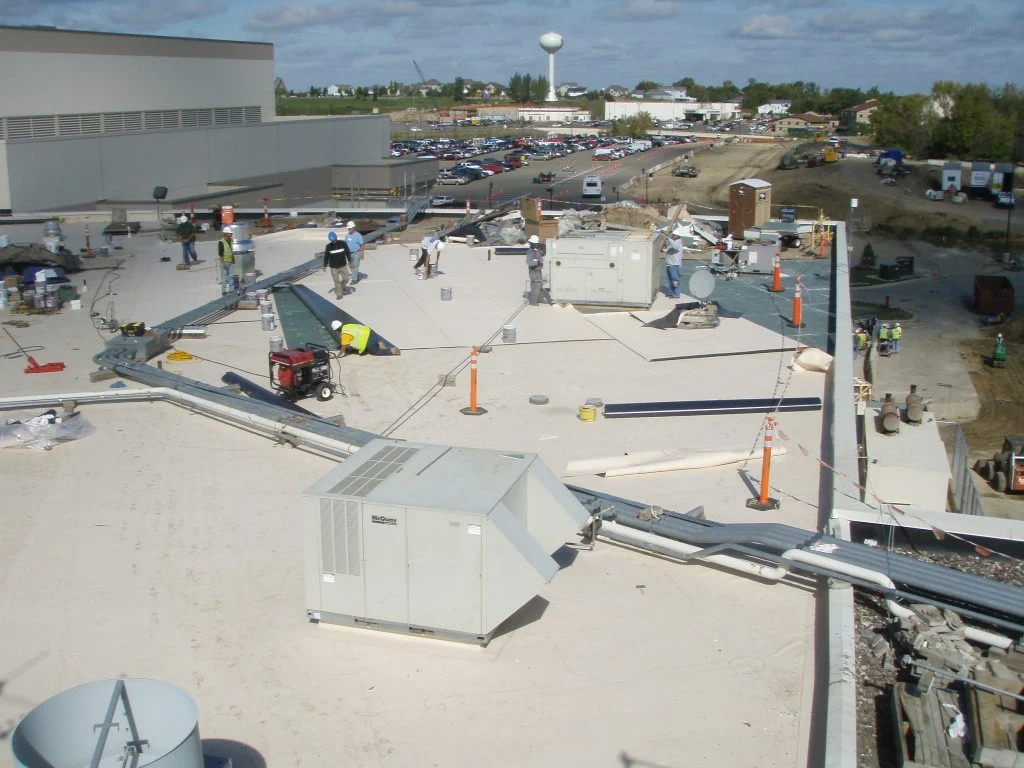
High-occupancy rooms need a lot of conditioned air. A packed group-fitness studio or a crowded weight floor generates heat, moisture, and carbon dioxide that the HVAC has to move fast, which means large rooftop units and a dense field of supply and exhaust penetrations. On a gym roof we routinely count two to three times the penetrations per thousand square feet that a plain retail box would carry. Every one of those is a flashing detail that has to be right.
The Humidity Problem Nobody Sees Until It Leaks
Fitness facilities that include a lap pool, lap-and-leisure aquatics, steam rooms, or a big locker and shower block carry an interior moisture load most owners never think about. Warm, humid interior air wants to push up into the roof assembly from below, and if the vapor control inside the assembly is in the wrong place, that moisture condenses inside the insulation. It does not show up as a roof leak at first — it shows up as collapsing R-value, then as staining, then as a deck problem years before the membrane itself wears out. We treat interior vapor drive as a design input on any natatorium or wet-area gym, not a detail to figure out later.
- Wet-area facilities: Where pools, steam, or large shower blocks are in play, we favor a fully adhered 60-mil TPO or PVC assembly. Adhered systems drop the fastener field that mechanical attachment punches through the membrane and give a more vapor-resistant build-up at the deck. We confirm the vapor retarder is positioned correctly for North Texas before we set the spec.
- Dry gyms: A weight-and-cardio facility without aquatics does not need the same assembly. There, 60-mil TPO mechanically attached is appropriate and more economical, and we put the money instead into curb work and walkway protection.
- Wide spans: The long open deck over the training floor gets fastener patterns and attachment matched to the actual deck gauge and rib, verified by pull testing — not a pattern borrowed from a small-bay building.
HVAC Curbs Are Where the Money and the Risk Live
Because gyms run so much rooftop equipment, curb flashing is the heart of the scope rather than a line item at the bottom. We document every curb — size, height, condition — before the project is priced. Undersized curbs are the recurring defect on older gym conversions; a unit dropped on a curb that is too short cannot be flashed to manufacturer warranty height. Where we find them, we raise or rebuild the curb as part of the work so the new membrane actually qualifies for its warranty. Group-exercise rooms, locker rooms, and pool enclosures each carry their own dedicated ventilation, so the curb count climbs fast and every one gets individual attention.
Working Around a Building That Never Closes
Many Fort Worth gyms run from before dawn to late at night, and the 24-hour formats never close at all. That operating pattern drives the schedule, and we build the coordination into the proposal rather than treating it as a change order. Tear-off and dry-in windows are confirmed in writing day by day, the facility manager gets a daily status so they can verify the roof is watertight before the next wave of members arrives, and crew start times and noise limits near occupied locker rooms are set in the pre-construction plan. For facilities with aquatics, we also sequence around pool-chemical deliveries and the HVAC service windows that keep indoor air within Texas health-department standards for commercial pools.
National brands and large regional operators run their facilities through corporate facilities departments with vendor-approval and documentation requirements, and we work inside those processes. We also work directly with independent gym owners and the investors who hold the real estate. Either way, the closeout package is the same: permit and final inspection, manufacturer warranty registration, a roof-zone diagram with the full penetration inventory, drain and flashing inspection records, and photo documentation of every detail — formatted to match a corporate asset system when the operator needs it that way.
Common Questions About Gym Roofing
Interior vapor drive from wet spaces needs a vapor retarder positioned correctly inside the assembly, not just a good membrane on top. We review the existing build-up, confirm whether the retarder is in the right place for the North Texas climate zone, and spec the assembly accordingly. Getting it wrong traps moisture and destroys insulation value within a few seasons.
For facilities with pools or steam, fully adhered 60-mil TPO or PVC is the call — it removes the fastener penetrations and resists vapor better at the membrane level. Dry gyms without aquatics do fine on 60-mil TPO mechanically attached, which costs less.
Yes. We confirm the schedule with your facilities team before mobilizing, lock in daily tear-off and dry-in windows in writing, and send a daily status report so the manager can verify watertight protection before the next operating cycle. Start times and noise limits near occupied areas are documented up front.
Yes. Every curb is documented before pricing, and undersized curbs — common on older gym buildings — are raised or replaced so the new membrane meets the manufacturer's curb-height requirement for warranty.