TPO Roof Systems
Commercial Roof Systems for Fort Worth buildings: tpo roof systems is reviewed through roof condition, drainage, flashing, access, warranty status, and budget timing.
TPO is the dominant commercial flat-roof membrane in Tarrant County. We install mechanically-attached and fully-adhered systems against manufacturer specifications and close out with 20-year no-dollar-limit warranty documentation.
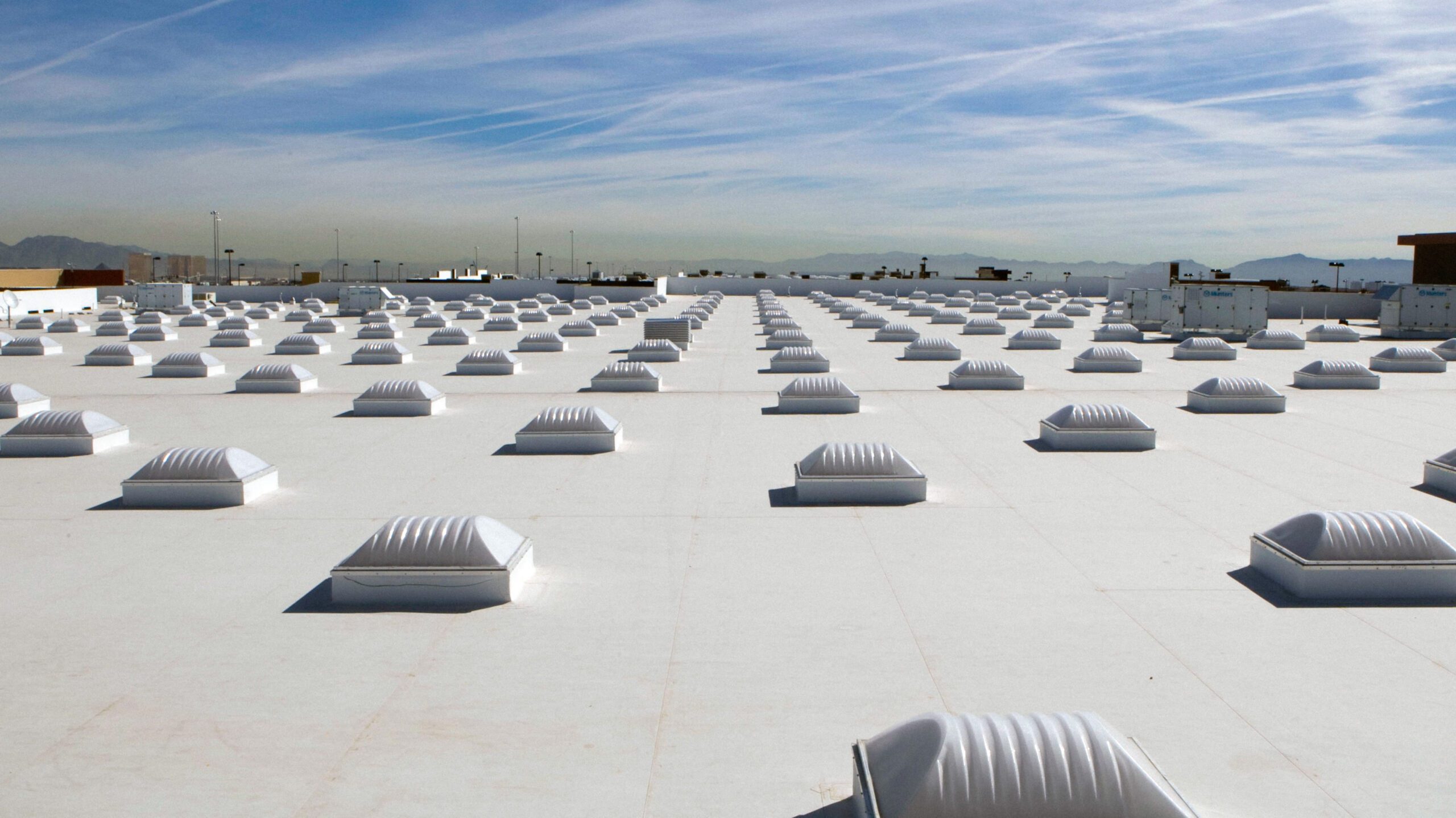
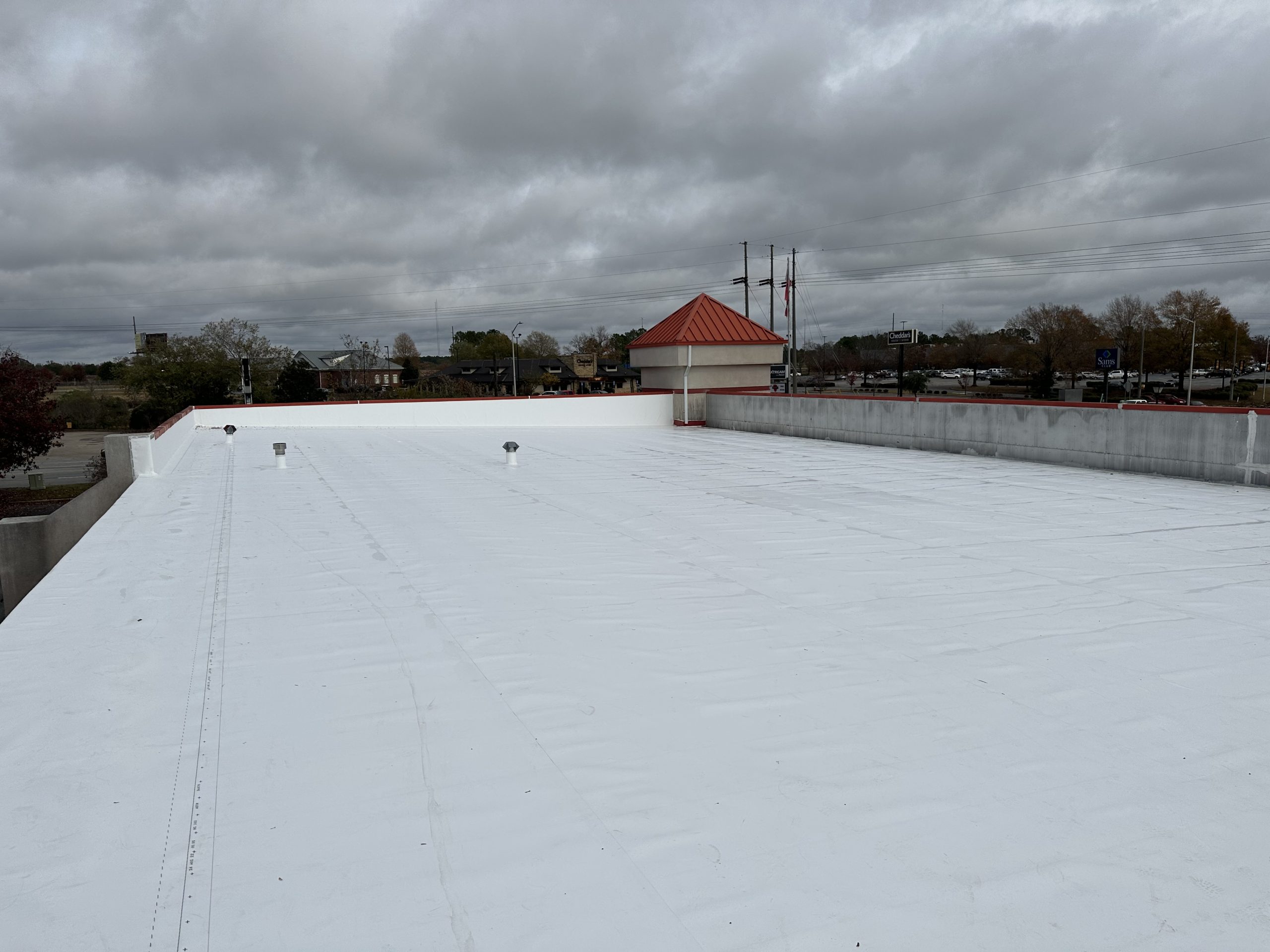
TPO — thermoplastic polyolefin — has been the volume membrane for Fort Worth commercial flat roofs since roughly 2005, and for good reason. The white surface reflects 80% of incident solar radiation, which matters in a metro where dark-membrane rooftop surface temperatures regularly exceed 160°F on a July afternoon. The heat-welded seam is mechanically stronger than adhesive-bonded seams. And the 20-year NDL warranty path from every major manufacturer — GAF, Carlisle, Johns Manville, Sika Sarnafil, Versico, Firestone — gives owners a documented capital horizon instead of a guess.
We install TPO on Fort Worth commercial buildings from Sundance Square office towers to AllianceTexas distribution centers to Hulen corridor retail strips. The installation configuration — mechanically attached versus fully adhered — depends on the building's use, deck type, wind-uplift zone, and manufacturer warranty requirements. Most Fort Worth work is mechanically attached over tapered polyiso on metal deck. That configuration handles the Tarrant County wind exposure and the budget reality of competitive commercial work.
What changes between projects is the details: flashing configurations at parapets, penetrations, and drains; fastener pattern density to match the building's exposure category; cover board selection for hail resistance and membrane attachment; and the maintenance protocol that keeps the warranty active across its term. We document all of it at closeout.
60-mil vs. 80-mil TPO for Fort Worth Conditions
60-mil TPO is the standard specification for the majority of Fort Worth commercial buildings — warehouses, office buildings, retail strips, and light industrial — with normal foot-traffic patterns and standard rooftop equipment. It carries a 20-year manufacturer NDL warranty and performs 25-30 years in Fort Worth conditions when installed correctly and maintained. This is what we install on the bulk of the mid-rise office and retail inventory along Camp Bowie and the I-30 commercial corridor.
80-mil TPO is justified for buildings with heavy rooftop equipment, frequent HVAC-service foot traffic, or owners who want the longer warranty term — some manufacturers extend to 25 years at 80-mil. AllianceTexas distribution centers, where HVAC service crews walk the roof weekly and rooftop equipment loads are substantial, almost always justify the 80-mil specification. The per-square cost premium is 10-15%; the reduced risk of puncture and longer warranty term usually make the math work.
Fort Worth's hail exposure is a third input. The metro sits in the highest hail-frequency corridor in North America. The 2017 Cultural District hail event put 3-inch stones through buildings that had been standing for 30 years without incident. We spec HD cover board (high-density polyiso or HD gypsum) under the TPO membrane on every project — it adds hail resistance and provides the FM impact rating that many insurance underwriters discount for. This is not optional on our standard detail.
Mechanically Attached vs. Fully Adhered TPO
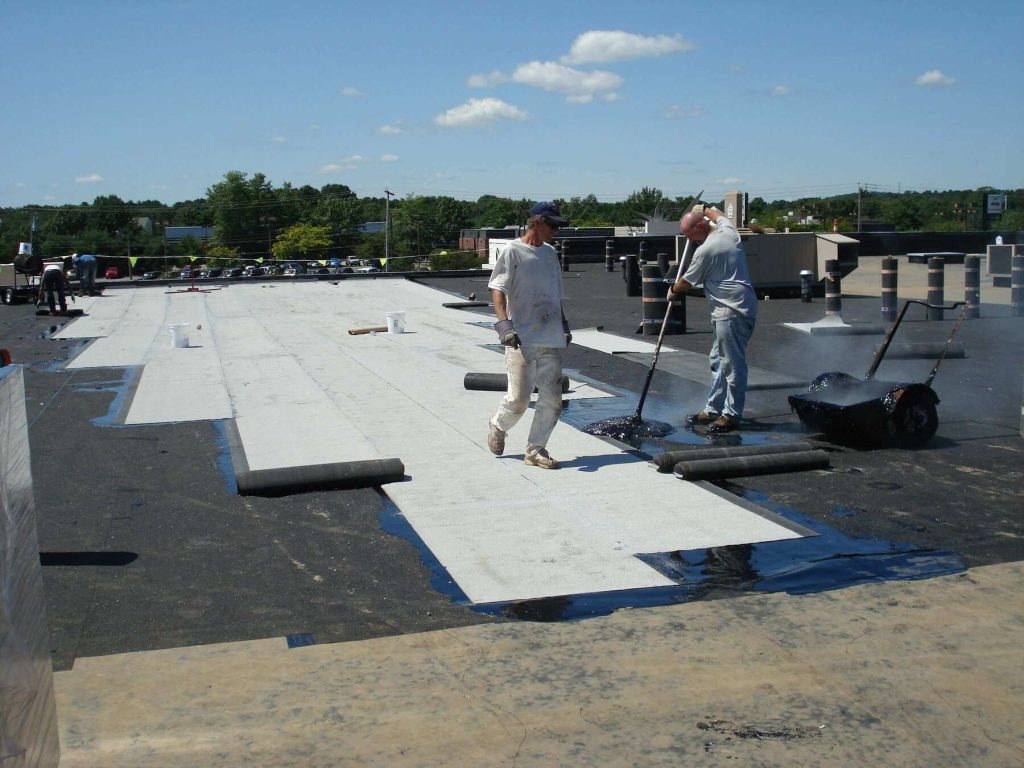
Mechanically attached TPO is installed with fasteners driven through the membrane and insulation into the deck at a specified pattern density calculated against the building's wind-uplift zone. For most Fort Worth commercial buildings — Exposure B, standard parapet height — the pattern allows 6-foot fastener rows. Buildings in open terrain (exposed industrial sites in west Tarrant County, tall buildings near the Trinity River corridor) require tighter patterns. Mechanical attachment is faster to install, easier to inspect, and the first choice for large square-footage builds where installed cost matters.
Fully adhered TPO is bonded to the cover board with manufacturer-approved adhesive across the full field. It carries a cleaner aesthetic, eliminates the fastener-row deflection pattern visible on mechanically attached roofs, and is required for some specialty applications (roof-deck overhangs, unconventional deck geometries). Fully adhered systems also perform better in extreme hail events because the membrane can't flutter between fastener rows. We specify fully adhered on Cultural District-adjacent buildings where aesthetics matter and on buildings with unusual geometry that complicates pattern design.
What the 20-Year NDL Warranty Actually Requires
A 20-year no-dollar-limit warranty means the manufacturer pays to fix any warranted defect — including the cost of replacing damaged rooftop equipment, interior damage, and all labor — for 20 years from closeout. That's a strong document if it's maintained. If it's not maintained, the warranty lapses and the owner has an undocumented roof.
Warranty maintenance on a Fort Worth TPO system means: an annual inspection by a manufacturer-certified contractor, documented repairs of any penetrations or flashings that develop defects, and a written maintenance record. We offer maintenance contracts that include the annual walk, the inspection report, and documented repair-and-close on any item that could put the warranty at risk. The maintenance cost over 20 years is a fraction of the replacement cost — and it's what keeps the warranty document in force when the owner needs it.
Scoping a TPO system for a Fort Worth commercial building?
We will walk the roof, pull cores if the recover-vs-replace decision depends on it, and deliver a written scope with manufacturer warranty path and installed-cost estimate.
Frequently Asked Questions
Can TPO be installed over an existing Fort Worth flat roof without full tear-off?
Yes, if the existing insulation is dry and the deck is sound. We pull moisture cores in 5-10 locations during inspection. If under 25% of cores read wet, a recover is viable — we pull the wet sections, replace insulation, and install new TPO over the existing system. If over 25% read wet, recover traps moisture, voids the new warranty, and fails inspection. Full replacement becomes the honest scope.
What manufacturers of TPO do you install in Fort Worth?
we install GAF, Carlisle, Johns Manville, Sika Sarnafil, and Versico. We are not tied to any one manufacturer — we specify based on the building's warranty requirements, the owner's preferred manufacturer (some national accounts have standard specs), and which manufacturer's design package best fits the project.
How does Fort Worth's heat affect TPO membrane life?
Surface temps above 140°F accelerate UV degradation of any membrane. TPO's white reflective surface keeps the substrate temperature 30-50°F lower than dark membranes — that's why we see no difference in TPO life between Fort Worth and cooler northern climates in practice. The bigger TPO killer in this market is hail damage in unsupported membrane areas, which is why the HD cover board specification matters.
Do you pull building permits for TPO installation in Fort Worth?
Yes. Replacement work and recover work above the City of Fort Worth permit threshold (currently $1,000 in project value) require a roofing permit. We pull permits, schedule the city inspection, and include the permit closeout documentation in the warranty package.