Parapet Wall Repair
Commercial Roofing Services for Fort Worth buildings: parapet wall repair is reviewed through roof condition, drainage, flashing, access, warranty status, and budget timing.
Parapet walls are the most common source of commercial flat roof water infiltration in Fort Worth. The flashing at the wall-to-roof junction has to accommodate structural movement, thermal expansion, and the UV load of the North Texas climate simultaneously — when one of those forces wins, the flashing fails and water follows.
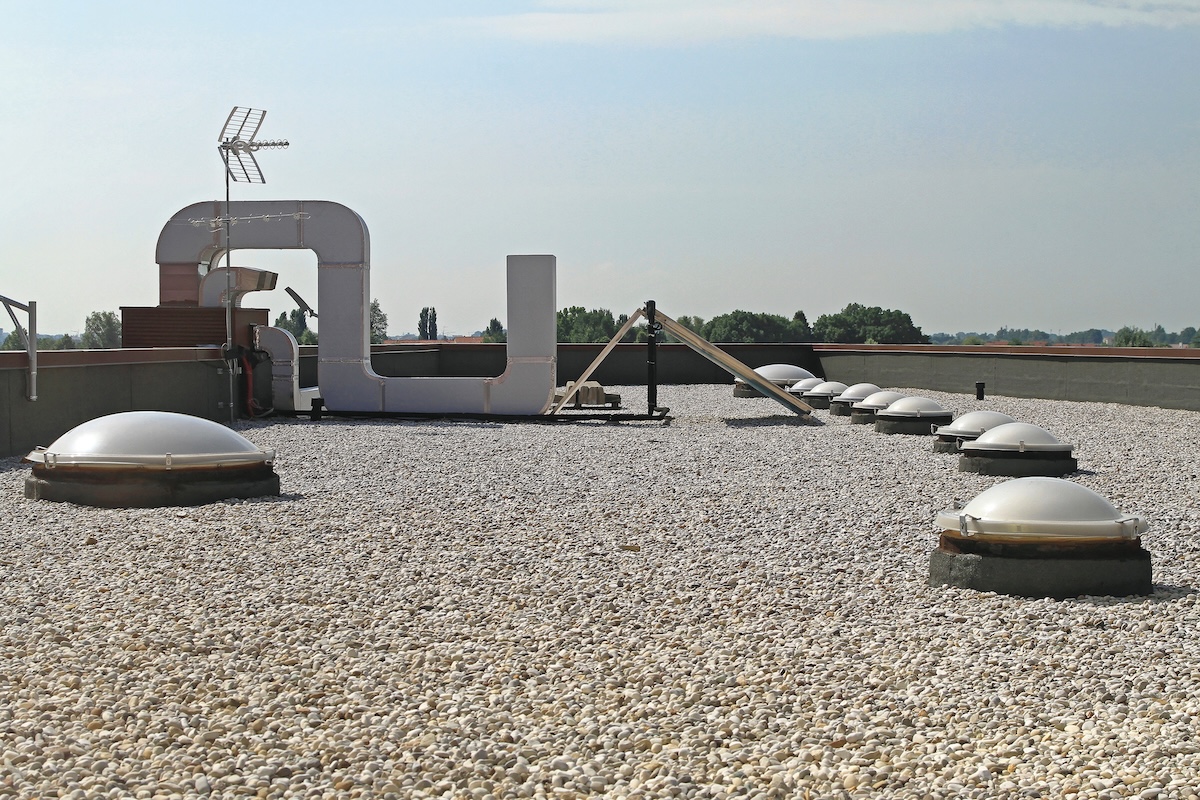
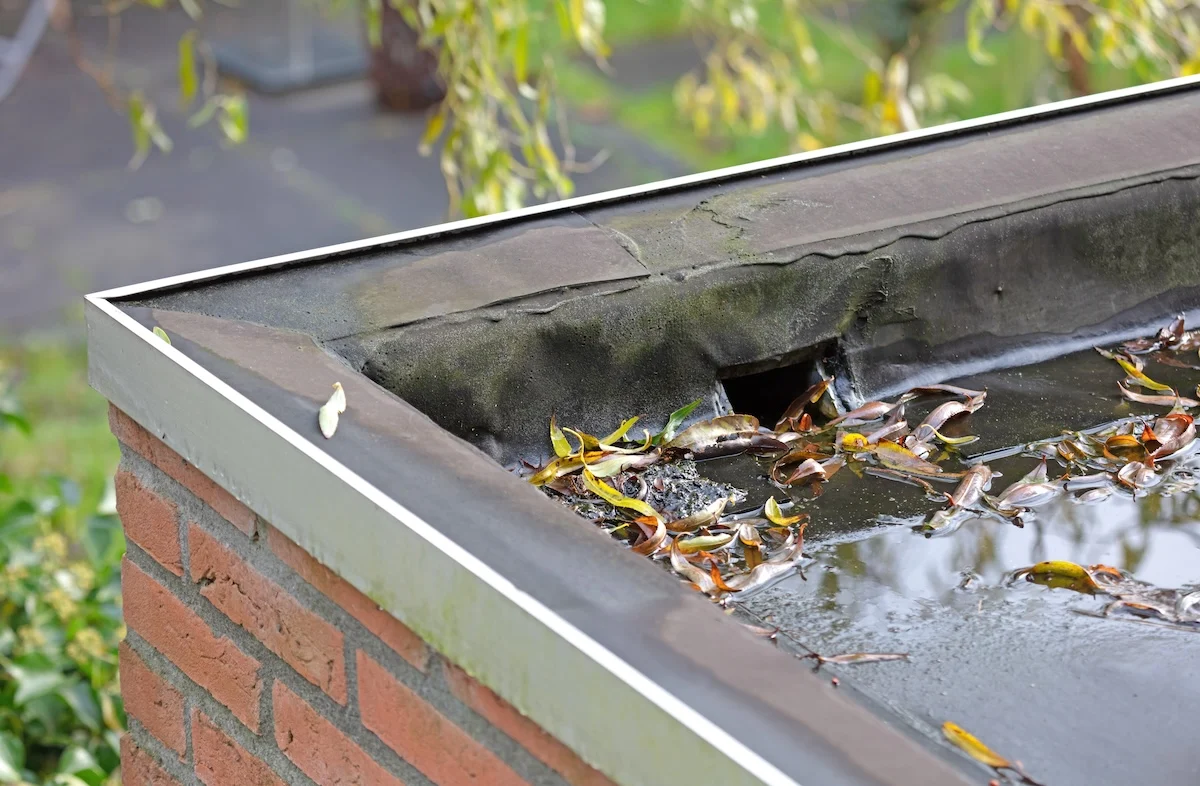
A parapet wall sits at the perimeter of a commercial flat roof, extending the building's exterior wall above the roof surface. It is a masonry or metal-stud assembly attached to a structure that moves. The counter-flashing, base flashing, and cap flashing system at the parapet is the joint that accommodates that movement while keeping water out of the building. It is the most mechanically stressed location on a commercial flat roof — and the most common source of water infiltration when it fails.
Fort Worth's geological context makes parapet flashing particularly demanding. The Eastern Cross Timbers limestone subbase (western Tarrant County) and the Blackland Prairie expansive clay (eastern Tarrant County) each create foundation movement, but of different types. Limestone subbase buildings in the West 7th, Cultural District, and Camp Bowie corridors experience relatively stable foundation behavior with movement concentrated at building expansion joints. Blackland Prairie clay buildings in the Near Southside, Polytechnic, and eastern Fort Worth corridors experience seasonal shrink-swell movement that loads the parapet walls with cyclic stress across every wet and dry season.
We rebuild parapet flashing systems to accommodate the specific movement type for the building's location and structural system — not to the generic detail in the manufacturer's field guide. Generic flashing details are designed for average conditions. Fort Worth parapet walls on clay soil are not average conditions.
The Parapet Flashing System — What Each Component Does
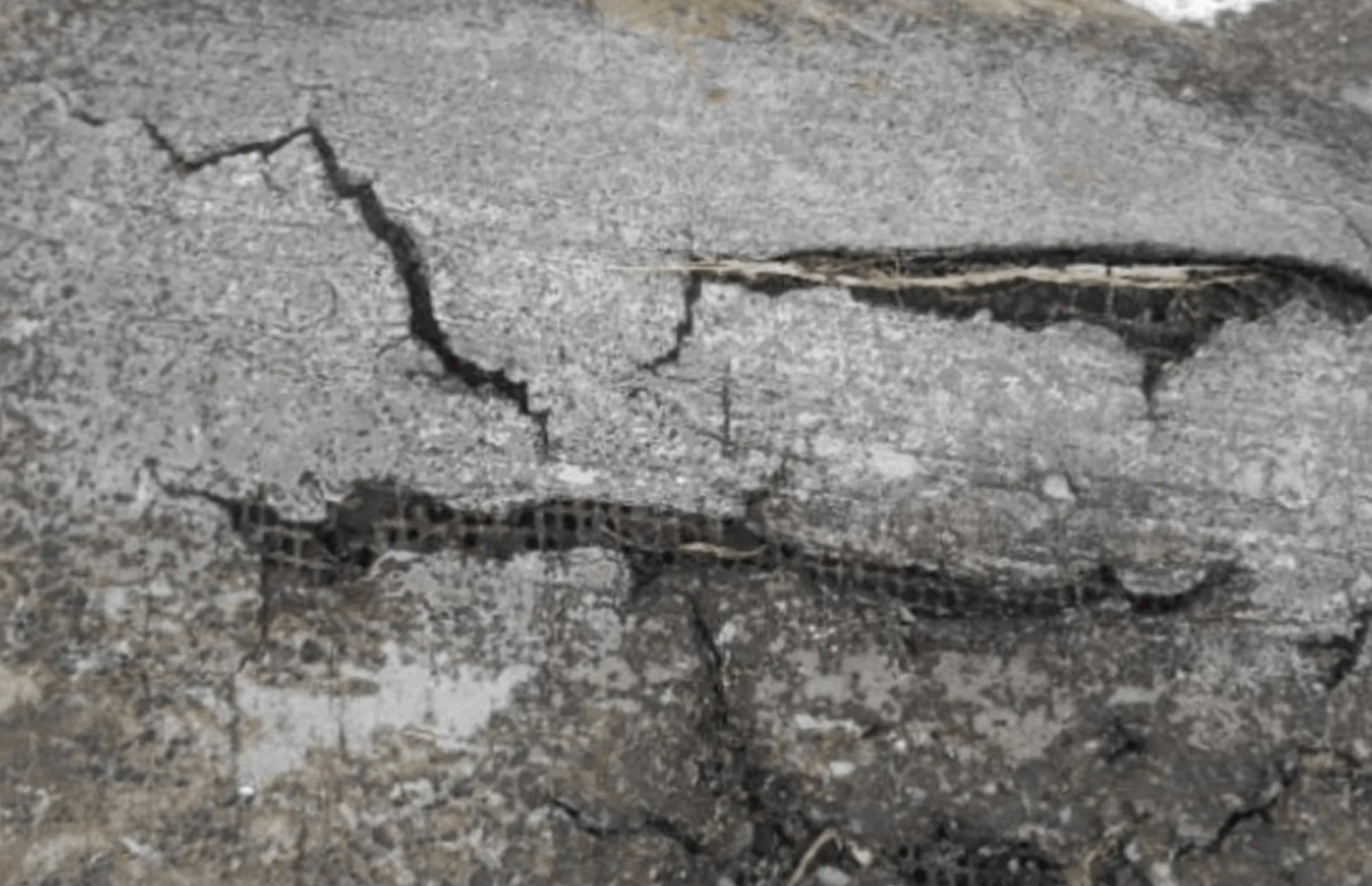
Counter-flashing: The upper metal flashing that is embedded in the masonry mortar joint or reglet cut into a concrete or CMU parapet. It overlaps the base flashing below it and allows the base flashing to move (expand and contract with the roof membrane) while the counter-flashing remains attached to the masonry. When the mortar joint that holds the counter-flashing deteriorates — which happens in Fort Worth's combination of UV exposure and freeze-thaw cycles — the counter-flashing unseats and the overlap seal fails. We re-point or reglet-cut to reset the counter-flashing rather than sealant-bridging over deteriorated mortar.
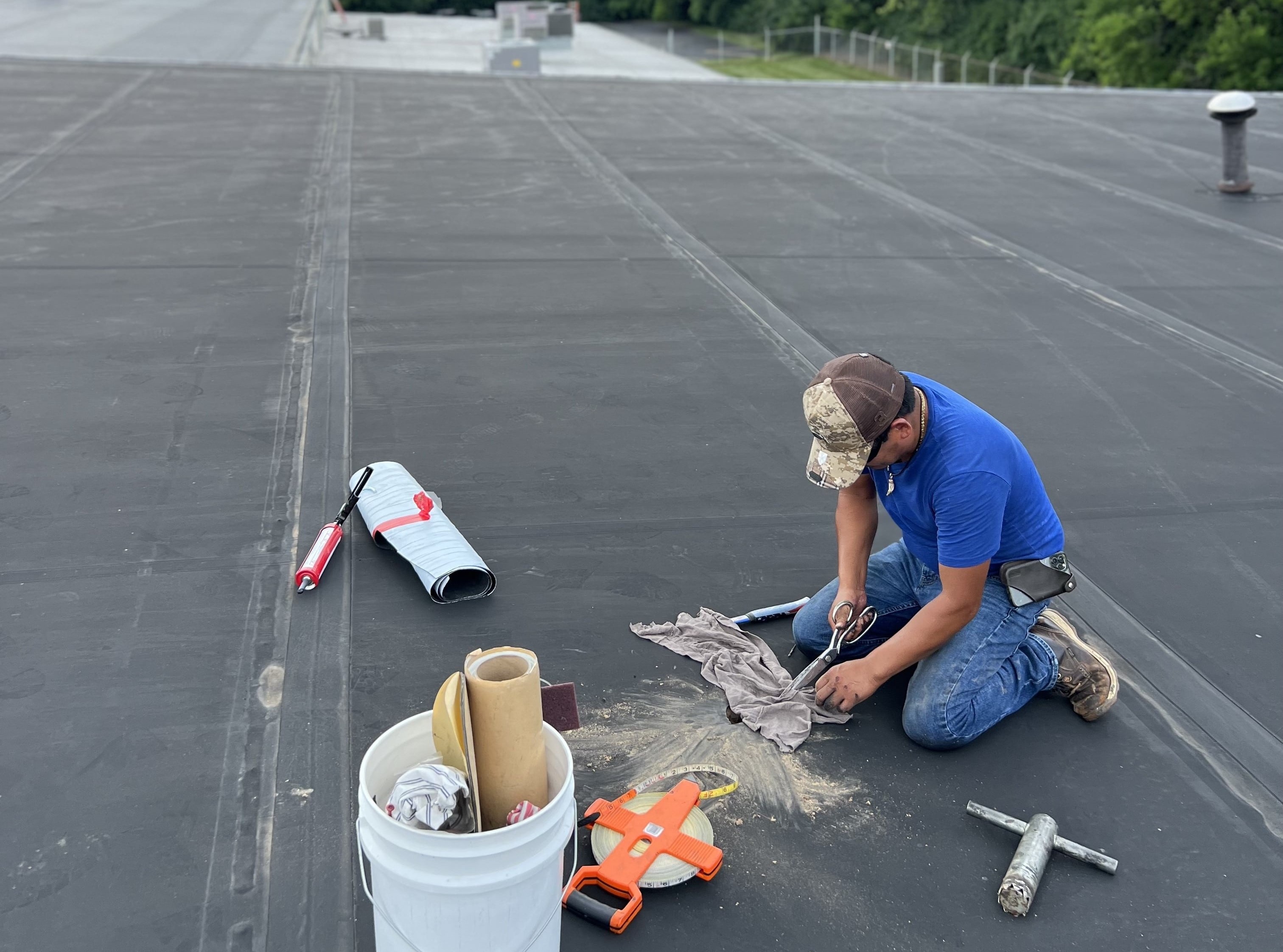
Base flashing: The membrane component that connects the roof field membrane to the parapet wall surface. On TPO and PVC systems, the base flashing is heat-welded directly to the field membrane and extends up the wall a minimum of eight inches above the roofline. On EPDM systems, it is bonded with contact adhesive. The base flashing must move with the field membrane as it expands and contracts thermally — Fort Worth summer-to-winter temperature swings of 80°F produce measurable membrane dimensional change that the base flashing has to follow. Rigid attachment of base flashing to the wall surface causes stress fractures at the wall face as the membrane moves.
Cap flashing (coping): The metal cap that covers the top of the parapet wall, lapped at seams and with end dams at corners. Coping failures are usually at seam laps (the caulk joint opens as the metal expands and contracts) or at corners where the end dam is undersized. Water that gets past the coping cap does not immediately appear as a roof leak — it migrates down through the masonry wall and may emerge as an interior wall stain well below the roofline. Coping failures are frequently misdiagnosed as window or curtain-wall failures because the moisture emerges so far from the entry point.
Masonry Sealant Restoration on Fort Worth Parapet Walls
Masonry parapet walls on Fort Worth commercial buildings — common in the older Near Southside and Magnolia Avenue commercial district, the Stockyards historic blocks, and the Camp Bowie retail corridor — develop mortar joint deterioration and masonry crack patterns over time that require sealant restoration as a distinct maintenance item from the roofing membrane system above.
Mortar joint re-pointing (tuckpointing) on the exterior face of a parapet wall is a masonry trade scope, but the roofing contractor is often the first to identify the need because parapet wall mortar failures typically appear first on the interior face (roof side) where they are visible during a roof inspection. We document masonry conditions in our inspection reports and coordinate masonry re-pointing as part of a parapet repair scope when the condition warrants it.
Elastomeric sealant at masonry cracks and movement joints in the parapet wall exterior face is a maintenance item that Fort Worth's UV load degrades faster than in more northern markets. Silicone-based elastomeric sealants outperform polyurethane sealants in Fort Worth's UV exposure — the difference in service life is typically 10–12 years (silicone) versus 5–7 years (polyurethane) at this latitude. We specify sealant type explicitly in parapet repair scopes and document what was installed so the maintenance record reflects the expected next-service interval.
When Parapet Repair Is Enough vs. When the Whole System Needs Rebuilding
Localized counter-flashing failure (one run or one corner) with the rest of the system in serviceable condition: repair is the right scope. Re-point the failed mortar joint, reset the counter-flashing, seal the reglet, and re-inspect in the next maintenance cycle.
Perimeter-wide counter-flashing deterioration with masonry spalling, rusted termination bar, and base flashing that is separated from the field membrane at multiple locations: rebuild is the right scope. Perimeter flashing rebuilds on a Fort Worth commercial building typically run one to two weeks of production and include counter-flashing replacement, base-flashing replacement welded or bonded to the field membrane, and coping cap inspection with seam re-sealing or coping replacement if warranted.
The test we apply: if more than 40 percent of the parapet perimeter has active deficiencies in the counter-flashing or base-flashing system, a perimeter rebuild is almost always more cost-effective over a 10-year horizon than individual section repairs. Spot repairs on a perimeter where the underlying flashing system is uniformly aged buy 12–18 months of relief before the next section fails.
Parapet flashing failing on your Fort Worth commercial building?
We will walk the parapet perimeter, document flashing conditions and masonry status, and deliver a repair scope with production timeline and cost range.
Frequently Asked Questions
Can I see parapet flashing failures from the roof surface without a specialist?
You can see some of them. Counter-flashing that has unseated from the mortar joint is often visible as a gap between the flashing and the masonry wall face. Coping cap seams that have opened are visible if you look closely at the horizontal surface of the parapet. But base flashing separation at the wall face — which is often covered by the counter-flashing overlap — and mortar joint deterioration on the interior masonry face are not visible without a systematic close-up inspection. Most building owners who discover parapet leaks have already had multiple ceiling stains by the time they look closely at the parapet.
How long does a parapet flashing rebuild take?
A full perimeter flashing rebuild on a typical 200-linear-foot parapet on a Fort Worth commercial building runs five to eight business days of production — counter-flashing removal and re-set, base flashing replacement with membrane welding or bonding, coping cap inspection and seam re-sealing. Larger buildings or buildings with complex parapet geometry (setbacks, height changes, through-wall penetrations) take longer. We deliver a production schedule before contract signing.
Does parapet repair require a permit in Fort Worth?
Parapet repair scopes that include structural masonry work require a City of Fort Worth building permit. Flashing replacement at the roofing membrane level typically falls under the roofing permit scope. We evaluate permit requirements for each parapet scope and pull all required permits — permit fees are passed through at cost.